
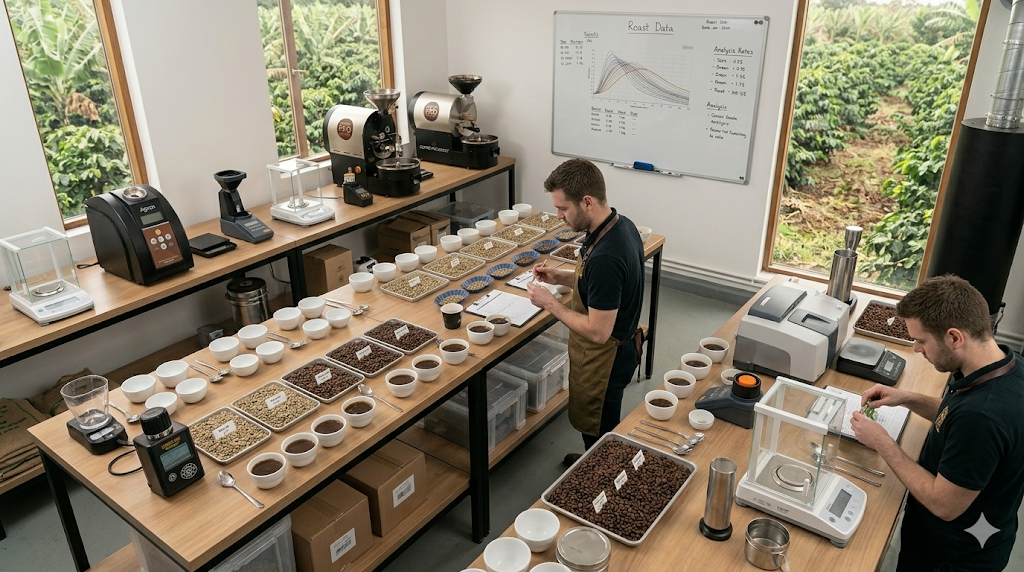
At Coffee Pro Direct, exceptional coffee begins with precision, analysis, and science. Our complete lab equipment range supports every stage from green coffee grading to roast profile development. A coffee lab provides the tools and environment needed to evaluate, test, and refine every aspect of coffee production. From assessing green coffee quality to monitoring roast profiles, a well equipped coffee lab allows us to maintain consistency, enhance flavor, and ensure that every cup of coffee meets the highest standards. For specialty coffee shops, roasters, and production facilities, investing in a professional coffee lab is a crucial step toward delivering excellence and gaining a competitive edge in the market.
Why a Coffee Lab is Essential
A coffee lab is essential because it enables us to evaluate coffee quality at every stage of production. By testing green beans, roasted coffee, and brewed samples, we can identify defects, assess flavor profiles, and maintain consistency across batches. Without a dedicated lab, coffee quality relies heavily on subjective evaluation, which may lead to inconsistencies and reduced customer satisfaction. A coffee lab empowers us with objective data and precision, making quality control systematic and reliable.
The rapid growth of specialty coffee businesses worldwide has increased the importance of professional coffee laboratories. Roasteries, exporters, and quality control teams rely on coffee labs to analyse beans, develop roasting profiles, and maintain flavour consistency across different batches.
Global Coffee Market and Specialty Coffee Growth
| Industry Metric | Global Value |
|---|---|
| Global Coffee Market Size | ~$495 Billion |
| Specialty Coffee Market | ~$105 Billion |
| Specialty Coffee Growth Rate | ~7–8% CAGR |
| Annual Global Coffee Production | ~170–175 Million Bags |
| Coffee Consuming Countries | 160+ |
Source: International Coffee Organization (ICO) / SCA Market Research
The expansion of specialty coffee has increased the need for dedicated coffee labs equipped with roasting, grading, and cupping tools to maintain quality standards.
Core Functions of a Coffee Lab
The primary functions of a coffee lab include quality assessment, flavour profiling, roasting analysis, and cupping evaluation. We use specialised equipment to measure moisture content, bean size, and density, as well as to analyse roast profiles and flavour characteristics. These functions allow us to make informed decisions, adjust roasting parameters, and ensure that every batch delivers optimal taste. A coffee lab is not just a testing space; it is the heart of quality assurance and innovation.
Professional coffee laboratories perform several types of analysis to evaluate bean quality, roasting behaviour, and flavour characteristics.
Coffee Lab Activities in Specialty Coffee Roasteries
Source: SCA — Specialty Coffee Association Market Research
Cupping and sample roasting remain the most widely used methods for evaluating coffee flavour potential before production roasting.
Coffee Lab Equipment Overview
A professional coffee lab is equipped with a range of tools to support accurate testing. Essential equipment includes coffee sample roasters, grinders, cupping trays, moisture meters, hulling machines, and analytical scales. Each tool serves a specific purpose, from sample preparation to flavour evaluation, and contributes to precise quality control. At Coffee Pro Direct, we carefully select equipment that offers reliability, durability, and accuracy, ensuring that our coffee lab can deliver consistent results every day.
A complete coffee lab includes equipment designed to support every stage of coffee testing and quality evaluation.
Essential Coffee Lab Equipment and Their Functions
| Equipment | Purpose | Role in Quality Control |
|---|---|---|
| Sample PRO 100 | Roast 80–120g per drum, 1–6 drums | Evaluate flavour potential |
| Lab Grinder LSG33 | 100–1,000μm stepless, 84mm discs | Ensure fair cupping comparison |
| Sample Sieves | ISO Ø4–8mm stainless mesh | Improve roasting consistency |
| Sample Divider | 4,000g, 32 channels, ±5% tolerance | Prevent testing bias |
| Moisture Analyzer MAC II | 10-second reading, no drift | Maintain roasting stability |
| Cupping Table + Cupping Bowls + Spittoon | SCA-standard sensory setup | Analyse flavour and aroma |
| Parchment Huller S200 | 200g batches, adjustable pressure | Process parchment to green bean |
| Coffee Sample Trays | Color-coded, brandable | Sample organization and presentation |
| Hand Sealer | Instant airtight seal | Sample archiving and preservation |
| Lab Module | Acacia wood, marble top, 3 variants | Lab organization and workstation |
Professional coffee labs combine these tools to create a structured workflow for testing, roasting, and evaluating coffee quality.
Organizing Your Coffee Lab Workflow
A well-structured coffee lab follows a systematic workflow that begins with green bean inspection and ends with sensory evaluation. Beans are first analyzed for size, moisture, and defects before being roasted in small batches. The roasted samples are then ground and evaluated through cupping sessions to determine flavor quality and roasting potential.
Importance of Cupping in a Coffee Lab
Cupping is one of the most critical procedures in a coffee lab. It allows us to assess the aroma, acidity, body, and flavor of coffee in a structured and standardized way. By performing regular cupping sessions using the Cupping Table, Spittoon, and Cupping Bowls, we identify defects, evaluate roast profiles, and compare origins or lots. This follows SCA cupping protocol standards. This process is vital for maintaining quality consistency, understanding coffee characteristics, and making informed blending decisions.
Green Coffee Analysis
Analysing green coffee is a foundational step in the coffee lab. We use Sample Sieves for size grading, the Moisture Analyzer MAC II for water content, and the Sample Divider for representative lot splitting. The Sampling Spear starts the process at warehouse level. Green coffee analysis helps identify defects such as insect damage, mold, or uneven drying. By performing this assessment before roasting, we ensure that only the highest quality beans proceed to the next stage, which ultimately results in a superior final product.
Roasting Analysis in the Coffee Lab
Roasting analysis allows us to monitor how green coffee transforms under heat. The Sample PRO 100 available in 1, 2, 4, or 6 drum configurations tracks flavor, aroma, and color development. Single-drum models include a K-type thermocouple for Artisan software data logging. Profiles scale directly to shop or commercial production roasters. Roasting analysis ensures that we achieve the desired profile consistently across batches. This step is crucial for specialty coffee shops and roasters who want to deliver a unique and high-quality experience to customers.
Coffee Lab Grinders
Precision grinding is essential for accurate flavor evaluation. The Lab Grinder LSG33 stepless dial, 100 –1,000μm range, 84mm hardened steel discs, 2kg hopper delivers consistent particle size for cupping and brewing tests. ETL, CE, NSF, and GS certified. Uniform grind size ensures that extraction is even, which directly impacts flavor and aroma. In the coffee lab, grinders play a crucial role in maintaining consistency, whether we are testing small sample batches or preparing coffee for sensory analysis.
Moisture Testing
Moisture content is a critical factor in coffee quality. The Moisture Analyzer MAC II measures water content in 10 seconds — no drift, pre-set profiles for green coffee, parchment, and cocoa. The ICO recommends 10–12% moisture for export-quality green coffee. Proper moisture levels prevent over-roasting, reduce the risk of mold, and improve storage life. By monitoring moisture regularly, we ensure that coffee retains its freshness, flavor, and integrity throughout the supply chain.
Coffee Hulling and Processing Equipment
The Parchment Huller S200 processes 200g batches with adjustable shelling pressure and a built-in timer. It converts parchment or dry cherry into clean green beans for grading and roasting. Proper processing ensures that samples are clean, uniform, and ready for evaluation. The coffee lab’s processing equipment enhances accuracy in testing and reduces the variability caused by inconsistent sample preparation.
Coffee Sample Dividers
The Sample Divider splits up to 4,000g through 32 channels at ±5% tolerance. No power required. It ensures every cupping, roasting, or analysis session begins with a truly representative sample. By splitting beans evenly, we can perform accurate cupping, roasting, and laboratory analysis. This tool reduces human error, improves repeatability, and allows us to obtain reliable data for quality control.
Integration with Data Analysis
Modern coffee labs integrate with Artisan roast profiling software the open-source standard used by professionals worldwide. Cropster integration is also available as an optional upgrade on the Sample PRO 100. This allows us to track roast curves, flavor profiles, and bean characteristics systematically. By analysing data over time, we can refine processes, detect trends, and make informed decisions to enhance quality. This integration ensures that our coffee production is both scientific and consistent.
Training and Skill Development in a Coffee Lab
A coffee lab is also a hub for training and skill development. Baristas, roasters, and quality control staff learn how to evaluate coffee systematically, handle equipment, and interpret data accurately. Training ensures that our team can maintain high-quality standards and implement best practices throughout the roasting and brewing process.
Benefits for Speciality Coffee Shops
Speciality coffee shops benefit immensely from a coffee lab. It allows us to differentiate our offerings, maintain consistent quality, and highlight the unique characteristics of each origin. In-house testing and analysis provide credibility and transparency to customers, building trust and enhancing brand reputation. A coffee lab empowers shops to innovate and deliver coffee experiences that stand out in a competitive market.
Coffee Lab for Production Facilities
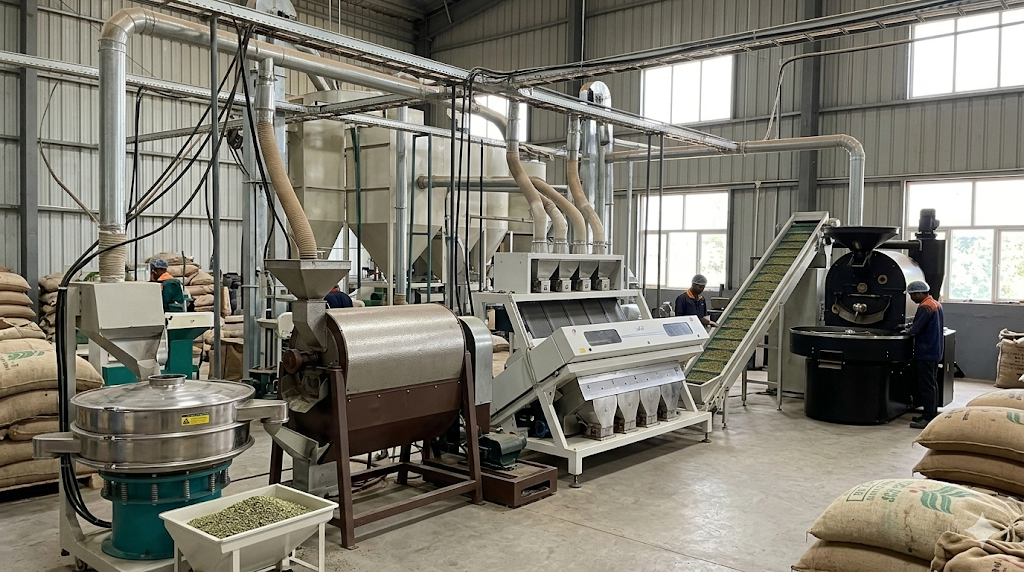
Large production facilities also rely on coffee labs to maintain quality control at scale. By implementing standardised testing procedures, we can monitor every batch for consistency, identify defects early, and optimise roasting profiles for commercial production. Coffee labs help maintain high standards even in high-volume operations.
Marketing Advantages of a Coffee Lab
Having a coffee lab can be a significant marketing advantage. Customers appreciate transparency and the ability to see that coffee is tested and evaluated scientifically. Showcasing a lab in marketing campaigns highlights the commitment to quality, reinforces brand credibility, and attracts coffee enthusiasts who value precision and craftsmanship.
Why Choose Coffee Pro Direct
At Coffee Pro Direct, we provide complete coffee lab solutions from the Sample PRO 100 and lab equipment packages to full PRO Solutions turnkey setups. 16+ years of experience. 700+ customers. 50+ countries. Our team offers guidance on setup, usage, and maintenance, ensuring that every coffee lab can deliver consistent, high-quality results. Choosing Coffee Pro Direct means partnering with experts who understand the science behind exceptional coffee and can support your goals in both specialty and commercial settings.
Conclusion
A coffee lab is the cornerstone of quality control, precision, and innovation in coffee production. At Coffee Pro Direct, we leverage the tools and expertise of a fully equipped coffee lab to evaluate beans, monitor roasting, and ensure consistency across batches. From cupping to moisture testing, sample division, and roasting analysis, every step is designed to maintain the highest standards. Investing in a professional coffee lab allows coffee shops, roasters, and production facilities to deliver exceptional coffee experiences, build customer loyalty, and differentiate their brand in a competitive market. Combining advanced equipment, scientific methodology, and expert guidance ensures that every cup served reflects the full potential of the coffee.
Explore lab packages at 10% discount → or get a quote today for a custom lab setup.
Let us help you build the perfect lab for your needs