
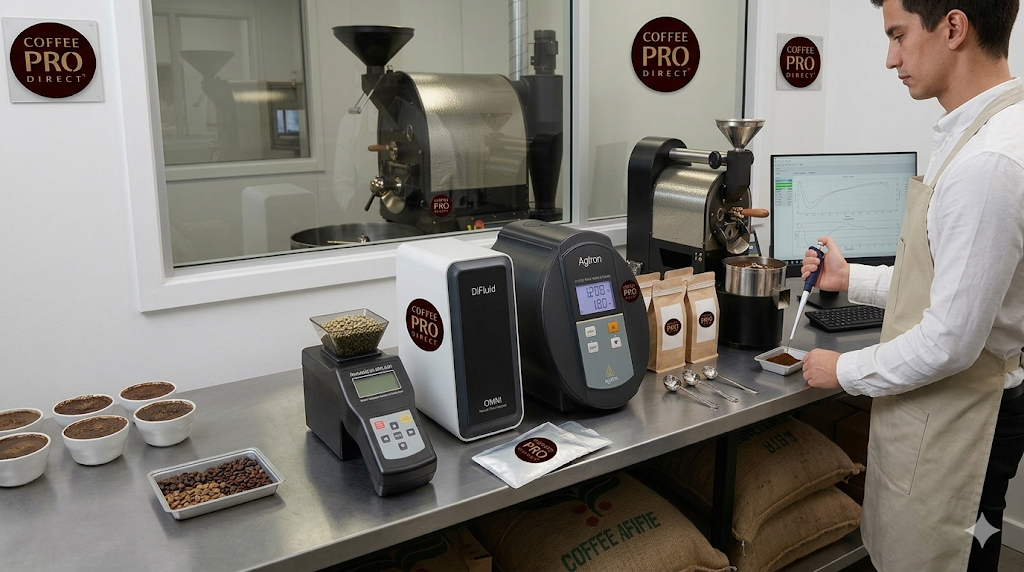
For a green coffee exporter, the quality of your lab is the quality of your reputation. Every shipment you dispatch carries your name. Every pre-shipment sample you send to a buyer is a promise. And every lot you approve or reject determines whether your business earns repeat contracts or loses them.
A professional coffee lab setup for exporters is not a luxury. It is the operational infrastructure that separates exporters who compete on price alone from those who compete on verified, documented, buyer-trusted quality. At Coffee Pro Direct, we supply the complete lab equipment range that export operations in over 30 countries depend on, from dry mill sample stations to bonded warehouse intake labs and exporter cupping rooms.
Why Every Serious Exporter Needs a Dedicated Coffee Lab
The global specialty coffee market is increasingly buyer-driven. Importers in Europe, North America, Japan, and the Middle East are no longer willing to accept lots that have not been independently verified at origin. Pre-shipment samples that fail on arrival, moisture out of range, flavour deviating from the approval sample, or physical defects not disclosed result in price deductions, full rejections, and damaged relationships that take years to rebuild.
The International Coffee Organization (ICO) defines minimum quality standards for internationally traded coffee, and the Specialty Coffee Association (SCA) sets the benchmarks for specialty-grade evaluation that premium buyers apply. A properly equipped coffee lab setup for exporters allows you to evaluate every lot against these standards before it leaves your hands, generating the data and documentation that buyers trust.
Beyond compliance, a well-equipped exporter lab delivers a direct commercial advantage:
- Higher acceptance rates — fewer lots rejected or renegotiated on arrival
- Stronger buyer relationships — transparent, documented QC builds long-term trust
- Better pricing — verified specialty-grade lots command premium pricing
- Faster decision-making — evaluate, approve, and ship lots faster with structured workflows
- Traceability records — moisture, defect, and cupping data attached to each shipment
The Essential Coffee Lab Setup for Exporters
A complete exporter coffee lab setup covers three stages: green coffee intake and physical analysis, sample roasting and flavour evaluation, and sample archiving and documentation. Here is every tool required at each stage.
Stage 1 — Green Coffee Intake & Physical Analysis
Sampling Spear — The first tool used at every lot intake. A sampling spear extracts representative samples from bags or bulk containers without disturbing the full lot. Professional-grade spears ensure the portion you analyse accurately reflects the lot, not just the accessible surface layer.
Sample Divider — After extraction, the bulk sample must be divided into representative sub-portions for different tests: one for moisture, one for physical grading, one for sample roasting, and one for archive. Manual division introduces a selection bias of 10–20%. The sample divider eliminates this bias entirely, ensuring every downstream test uses a statistically equal portion of the same lot.
Parchment Coffee Huller — For exporters handling parchment coffee, hulling is required before physical grading and moisture testing. The parchment coffee huller removes the parchment layer with minimal bean breakage preserving structural integrity for accurate defect classification and moisture reading.
Moisture Analyzer — The Moisture MAC II measures water content in green coffee, parchment, and cocoa in 10 seconds with ±0.1–0.3% accuracy. The SCA and ICO both specify 10–12% as the optimal range for green coffee. Lots outside this window are rejected or renegotiated in most specialty trade relationships, which means moisture verification is the single most important non-negotiable in any exporter lab setup.
Sample Sieves — Bean size classification is a standard component of physical grading for specialty-grade evaluation. Sample sieves sort beans by screen size, enabling consistent grading that matches international standards and buyer specifications.
Stage 2 — Sample Roasting & Flavour Evaluation
Sample PRO 100 — The heart of every exporter lab setup. The Sample PRO 100 roasts 80–120g per drum across 1, 2, 4, or 6 configurations, enabling direct multi-origin or multi-lot comparative roasting in a single session. With gas or electric heating, a K-type thermocouple for data logging via Artisan or Cropster, and SCA compliant batch sizing, it is the professional standard for pre-shipment evaluation at origin.
Lab Grinder — After roasting, samples must be ground to a consistent particle size before cupping. The lab grinder maintains ±50–100 micron consistency per the SCA cupping standard of 250–400 microns, ensuring the flavor you taste on the cupping table reflects the roast, not grind variability.
Coffee Trays — Organize roasted and green samples by lot number, origin, and processing method using color-coded, non-absorbent coffee trays. Zero cross-contamination between lots. Stackable for space efficiency in compact export station labs.
Cupping Table — The cupping table is where flavor decisions are made. A professional-grade table with ergonomic height, moisture-resistant surface, and circular workflow layout supports structured, repeatable SCA cupping protocol sessions, whether you are evaluating lots alone or hosting buyers for pre-shipment tastings.
Cupping Bowls — Uniform 200–260 ml cupping bowls with consistent thermal properties ensure every sample is evaluated under identical conditions eliminating the variable introduced by mismatched vessels.
Spittoon — Essential for multi-round cupping sessions with buyers or internal teams. The spittoon enables professional tasting hygiene across long sessions without palate fatigue from swallowing.
Stage 3 — Sample Archiving & Documentation
Hand Sealer — Every evaluated lot should have an archived reference sub-sample sealed airtight with the hand sealer and stored for future comparison or dispute resolution. This is standard practice in export operations complying with ICO trade documentation requirements.
Complete Exporter Coffee Lab Setup — Equipment Overview
| Tool | Function | Key Specification |
| Sampling Spear | Representative lot extraction | Warehouse and bag sampling |
| Sample Divider | Bias-free sub-sampling | ±1–5% accuracy per ICO standards |
| Parchment Coffee Huller | Parchment removal | <2–3% bean breakage |
| Moisture Analyzer | Water content verification | 10 seconds, ±0.1–0.3% accuracy |
| Sample Sieves | Bean size classification | SCA-compliant screen sizes |
| Sample PRO 100 | Pre-shipment sample roasting | 80–120g, 1–6 drums, gas or electric |
| Lab Grinder | Consistent pre-cupping grind | ±50–100 micron particle consistency |
| Coffee Trays | Sample organisation | Non-absorbent, colour-coded, stackable |
| Cupping Table | Structured sensory evaluation | SCA protocol-compliant |
| Cupping Bowls | Sample evaluation vessels | 200–260 ml uniform thermal properties |
| Spittoon | Tasting hygiene | Durable, easy-clean |
| Hand Sealer | Reference sample archiving | Airtight seal for dispute resolution |
| Lab Module | Complete workstation | Modular configuration for any space |
All tools are available individually or in our special deals and packages at 10% off.
The Exporter Coffee Lab Workflow — Step by Step
A structured workflow is what transforms individual tools into a reliable quality system. Here is the complete professional sequence used by export operations worldwide:
1. Lot Extraction: Draw a representative sample from the bag or bulk container using the sampling spear. Multiple insertions at different depths and positions ensure the sample genuinely reflects the lot.
2. Sub-sampling Pass the bulk sample through the sample divider to create equal, unbiased sub-portions for each test type.
3. Hulling (if parchment) For parchment coffee, hull with the parchment coffee huller to expose the green bean before moisture testing and grading.
4. Moisture Verification Test immediately with the Moisture MAC II. Result in 10 seconds. Log against the lot number. Any reading outside 10–12% triggers a hold for further investigation.
5. Physical Grading Pass through sample sieves for bean size classification. Conduct defect count per SCA green coffee classification standards.
6. Sample Roasting: Roast the evaluation sub-sample on the Sample PRO 100 with Artisan data logging active. Record the roast curve, first crack timing, and drop temperature.
7. Sample Organization: Allow 8–24 hours for degassing. Organize cooled samples by lot on coffee trays.
8. Grinding: Grind each sample on the lab grinder immediately before cupping. Target 250–400 microns per SCA protocol.
9. Cupping Evaluation Pour and evaluate on the cupping table using cupping bowls and a spittoon. Score per the SCA 100-point cupping form. Document aroma, flavor, aftertaste, acidity, body, balance, and overall.
10. Archiving Seal the reference sub-sample airtight using the hand sealer. Store with lot number, date, moisture reading, and cupping score for traceability documentation.
Coffee Lab Setup for Exporters — Three Tiers
Not every export operation starts with the same budget or space. Here are three practical configurations based on your operation size:
Tier 1 — Entry-Level Exporter Lab
For small exporters, farmer cooperatives, and dry mills, establishing quality control for the first time.
| Tool | Purpose |
| Sampling Spear | Lot extraction |
| Sample Divider | Representative sub-sampling |
| Moisture Analyzer | Green coffee moisture verification |
| Sample PRO 100 (1-drum) | Single-lot sample roasting |
| Lab Grinder | Pre-cupping grind preparation |
| Coffee Trays | Sample organisation |
| Hand Sealer | Archive sealing |
Tier 2 — Professional Exporter Lab
For mid-size exporters evaluating multiple lots simultaneously and hosting buyer tastings.
Everything in Tier 1, plus:
| Tool | Purpose |
| Sample PRO 100 (4-drum) | Multi-lot comparative roasting |
| Parchment Coffee Huller | Parchment removal for green bean exposure |
| Sample Sieves | Physical grading and size classification |
| Cupping Table | Structured buyer-facing cupping sessions |
| Cupping Bowls | SCA-compliant evaluation vessels |
| Spittoon | Multi-round tasting hygiene |
Tier 3 — Full-Scale Export QC Lab
For large exporters, trading houses, and origin labs, managing high-volume lot evaluation daily.
Everything in Tiers 1 and 2, plus:
| Tool | Purpose |
| Sample PRO 100 (6-drum) | Maximum throughput — 6 simultaneous comparative roasts |
| Lab Module | Complete modular workstation configuration |
| Coffee Roasting Handbook | Team training and reference resource |
All three tiers are available as part of our special deals and packages at 10% off, or configured to your exact space and workflow requirements via PRO Solutions.
Global Export Lab Usage — By Stage
| Lab Activity | Frequency in Export Operations | Tools Required |
| Moisture testing at lot intake | Daily — every incoming lot | Moisture Analyzer, Sampling Spear |
| Physical grading and defect analysis | Daily — every lot before approval | Sample Sieves, Parchment Huller, Sample Divider |
| Pre-shipment sample roasting | Per shipment — before every dispatch | Sample PRO 100, Lab Grinder |
| Buyer cupping sessions | Weekly to monthly | Cupping Table, Cupping Bowls, Spittoon, Coffee Trays |
| Reference sample archiving | Per shipment | Hand Sealer |
* Based on ICO green coffee trade workflow standards and SCA quality evaluation best practices.
How a Coffee Lab Setup Improves Export Quality
Fewer Rejections and Disputes
When every lot is verified for moisture, physical quality, and flavour before dispatch, the rate of buyer rejections drops dramatically. Exporters who invest in lab infrastructure routinely report 20–40% reductions in dispute rates within the first year of operation. This translates directly into lower costs, fewer contractual penalties, and stronger buyer relationships.
Documented Quality = Better Pricing
Buyers pay more for coffee that comes with documentation. A cupping score, a moisture reading, a defect count, and a roast curve each of these data points reduces the buyer’s perceived risk and justifies a higher price. An exporter without a lab can only offer coffee. An exporter with a professional lab can offer verified, documented, traceable quality.
Buyer Hosting = Sales Advantage
A well-equipped exporter lab is not just a quality control station; it is a sales tool. Hosting buyers at your lab for cupping sessions builds trust, demonstrates transparency, and creates the personal relationship that underpins long-term commercial partnerships. The cupping table, cupping bowls, and branded coffee trays are the first things a buyer sees when they visit, and they form an immediate impression of your professionalism.
Staff Training and Consistency
A coffee lab setup for exporters with a lab module workstation enables structured staff training, ensuring your entire team evaluates coffee to the same standard, using the same tools, following the same workflow. This consistency is what allows you to scale without losing quality control.
Why Choose Coffee Pro Direct?
Coffee Pro Direct is the specialist supplier of choice for export operations, building professional coffee lab setups. Our equipment is designed specifically for the specialty coffee industry, not adapted from generic laboratory instruments, and every tool in our lab range is built to work together as a unified workflow system.
We supply export operations across Latin America, East Africa, Southeast Asia, the Middle East, and Europe with lab equipment that meets SCA and ICO standards, supported by expert guidance from our PRO Solutions consulting team.
When you are ready to build or upgrade your exporter lab, contact us to discuss your workflow, space, testing volume, and budget, and we will configure the right setup for your operation.
Related Reading
Coffee Lab Equipment – Build a World-Class Coffee Lab | Lab Coffee Trays – A Must-Have Tool for Quality Control & Brand Building | Coffee Sample Roaster Machine – Need Precise Roast Profiling? | Moisture Meter for Coffee Beans – Trusted Precision | Coffee Huller Machine – Precision Parchment Removal | Advanced Lab & QC Equipment for Roasteries
Browse our Sample Pro 100 Roaster Today
Let us help you build the perfect lab for your needs